
Study Release: Electromobility: A Closer Look at Consumer Perceptions
Study Release: Electromobility: A Closer Look at Consumer Perceptions
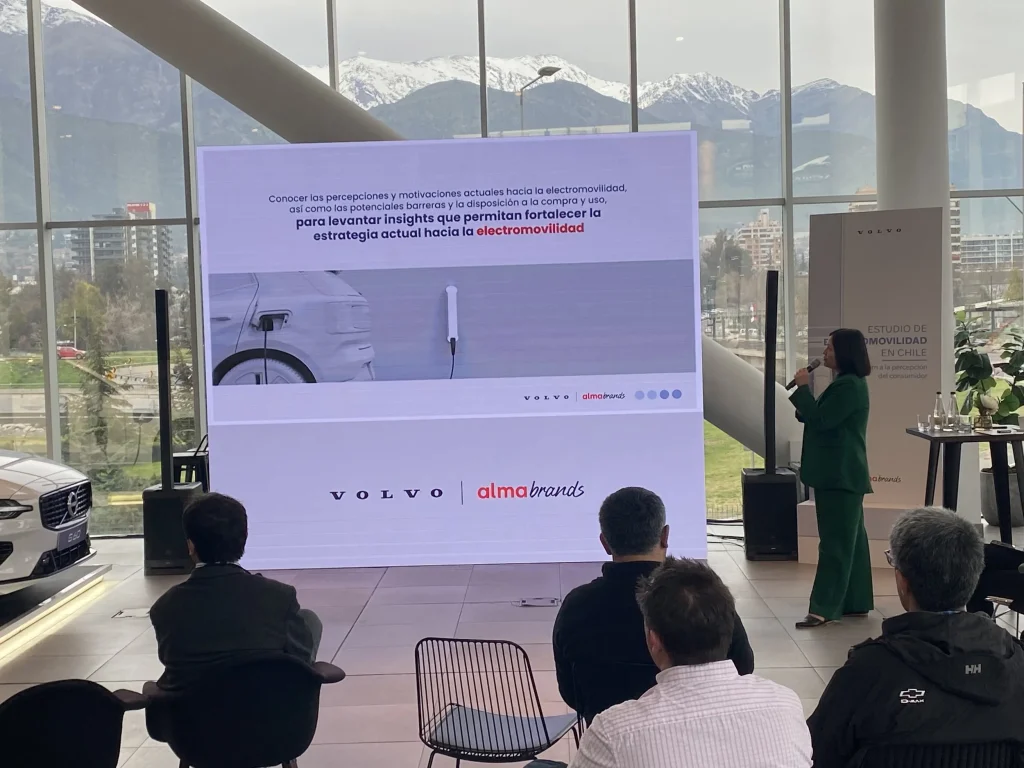
With the aim of promoting the development of zero-emission mobility at the local level, Volvo Car Chile and Almabrands presented the first Electromobility Study on Tuesday, September 5, which delves into the consumer perspective. This report highlights the main areas for progress in this field, as well as the significant challenges facing the automotive industry.
The study was conducted using an integrated qualitative and quantitative methodology, with a total of 16 in-depth interviews and 423 online surveys, respectively. The sample profile included men and women between the ages of 25 and 70 who are current owners of plug-in hybrid and electric cars (20%), as well as potential users of this technology, with the aim of gathering information about their perceptions and knowledge regarding electromobility.
This report highlights that, at a time when technology and environmental stewardship are advancing hand in hand, the automotive industry plays a fundamental role as an ambassador for electromobility, where zero-emission mobility is seen as a symbol of the future and of a better world.
However, the main findings show that advancing electromobility requires addressing major and significant challenges that can be tackled at the local level: raising public awareness on this issue, which translates into greater information about the benefits and contributions to individuals, the country, and society; strengthening incentives—that is, promoting access and sales through more affordable prices and tax incentives; and expanding the national fast-charging network with the participation of stakeholders from all sectors.
When asked what they consider to be the main benefits of electric mobility, 66% of consumers say it reduces pollution and helps protect the environment and the planet. Meanwhile, 42% view zero-emission mobility as a cost-saving measure in the medium and long term, and 17% believe that electric cars offer a more comfortable driving experience, without noise or vibrations.
A closer look at consumer perceptions of electromobility revealed that a lack of awareness is one of the main barriers to progress toward a future of zero-emission mobility. Fifty-five percent—that is, more than half of those surveyed—reported having little or no knowledge of this topic, citing a lack of information as the main reason for not entering this segment. Given this, it is clear that the more knowledge people have, the more willing they are to make a purchase.
Another barrier to adoption stems from the fact that electromobility is perceived as a technology that is not very accessible to people. 42% of people say that electric vehicles are not affordable for everyone. The high cost and taxes associated with this type of vehicle are seen as a lingering problem, perceived as an “unjustified penalty” for those who wish to transition to electric mobility, given the lack of real incentives for its use—for example, in terms of taxes and prices.
The next point in the report concerns a charging network that is not progressing as expected, with 15% of respondents citing this as one of the barriers to adoption. Finally, expectations for greater range in these types of vehicles become a key factor when considering entering the segment, as 8% of respondents believe that the electric range is not sufficient for long trips.
At Almabrands, we want to continue contributing to the development of better companies and a better society through our strategic research processes. That is why we are proud to collaborate on this study with Volvo Car Chile, which allows us to engage with the issues of the future that are relevant to both today’s and tomorrow’s generations.


Let's talk
Behind every challenge lies an opportunity to make an impact.
Tell us what you're going through, and let's talk about how we can tackle it together.