



Connecting Organizational and Personal Purpose: A Two-Way Journey
What we did
Connecting personal purpose with organizational purpose is the key to mobilizing real commitment and impact
What are you looking for?
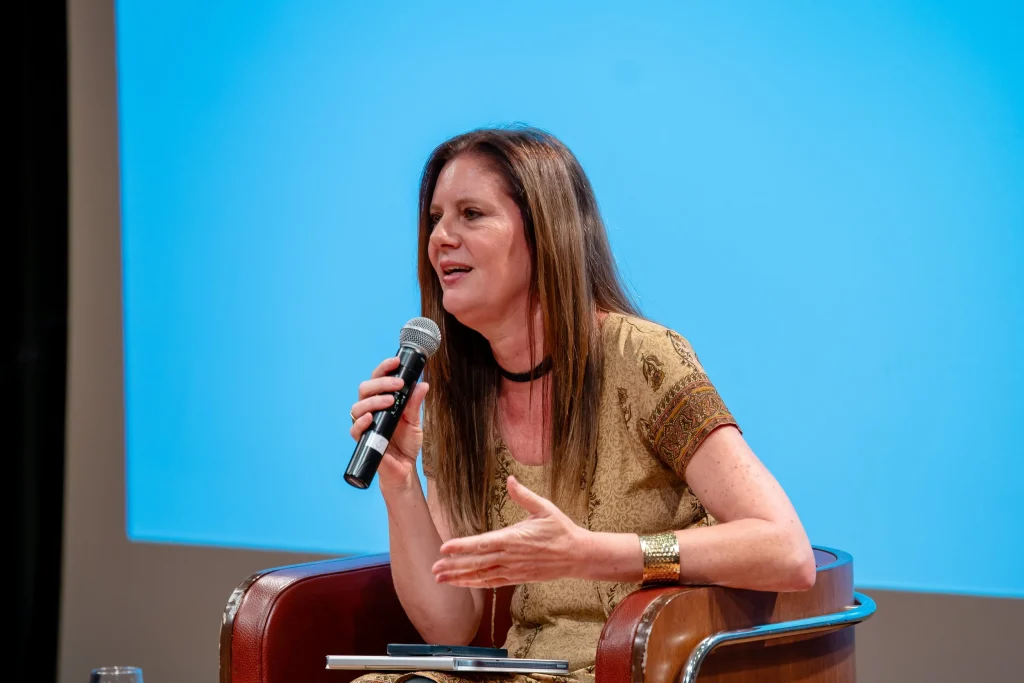
USEC Gathering: The Role of Business in Rebuilding Trust in a Fragmented World
In a context marked by social fragmentation, polarization, and distrust of institutions, the conversation about trust is no longer about reputation. Today it is structural.
In this setting, Carolina Altschwager, founding partner of Almabrands, was a panelist at the “Café con…” event organized by the Unión Social de Empresarios Cristianos (USeC), which addressed a key challenge: what role organizations should play in rebuilding social ties.
The event, “Beyond the Island: Building Bridges in a Fragmented World,” also featured Renzo Corona, Senior Partner at PwC and Director of ICARE, and Carolina Palacios, CEO of Edelman Peru, who previewed some findings from the Trust Barometer study.
In his opening remarks, Enrique Cruz, President of USeC, noted that a company that claims to put people at the center while also aiming to be highly productive must address every dimension of its workers, including the spiritual dimension. He added that “when workers know that business leaders care about creating spaces for dialogue, all indicators improve.”
At Almabrands, our view was clear: companies are not just economic actors; they are one of the few spaces where real diversity coexists today.
Before entering the workforce, people tend to grow up in relatively homogeneous social, educational, and cultural environments. It is in organizations where, often for the first time, they encounter different perspectives, stories, and ways of seeing the world.
And that is no small thing.
“Companies have a unique opportunity to be spaces for connection and for building social capital, because they don’t need to go looking for diversity: they already have it within,” Carolina said.
But that opportunity is not automatic.
Trust is neither declared nor imposed. It is built over time, through real, sustained, and often uncomfortable conversations. No shortcuts.
In an environment dominated by what Edelman calls a “grievance crisis”—the widespread feeling of being ignored by the system—organizations face a double challenge: managing their own internal tensions while helping to mend the social fabric.
“Insularity holds back progress, and companies must address it. If left unattended, unmanaged differences will hold back productivity at work, weaken CEO leadership, and create greater resistance to innovation” (Carolina Palacios)
This means taking responsibility for something that is not always on the strategic radar: the quality of dialogue.
Because conversing is not persuading or negotiating. It is being willing to listen, to open yourself to other perspectives, and to build from difference. And that is a capability we, as a society, have barely developed.
That is where organizations can make a difference.
Not only by designing more inclusive cultures, but by activating real spaces for connection that help rebuild trust in everyday life.
At Almabrands, we have worked for years understanding trust not as an intangible, but as a system that can be diagnosed, managed, and strategically activated.
Because in a fragmented world, competitive advantage lies not only in what you do, but in the ability to build bonds that sustain that work over time.
So the question is: are our organizations operating as islands… or as bridges?
What we did
Connecting personal purpose with organizational purpose is the key to mobilizing real commitment and impact

What we did
Aaron Hurst explores the shift of purpose from inspirational rhetoric to a strategic imperative, and the key challenge of distinguishing between authentic conviction and mere corporate narrative.

What we did
It All Begins Here
Let's talk
Tell us where you are and let's talk about how to tackle it together.