



Connecting Organizational and Personal Purpose: A Two-Way Journey
What we did
Connecting personal purpose with organizational purpose is the key to mobilizing real commitment and impact
What are you looking for?
Compliance with Purpose: From Regulation to a Culture of Integrity
In resilient organizations, regulatory compliance is understood as a means to consolidate a culture of integrity where ethics stem from a shared purpose. Here, the challenge lies not only in mitigating risks, but in inspiring collective behavior that prioritizes doing the right thing, turning compliance into a strategic and human asset.
“To begin with, we have the freedom to decide how we are going to act. I sincerely believe that no society can function if its members do not maintain an ethical attitude” (Carolina Altschwager)
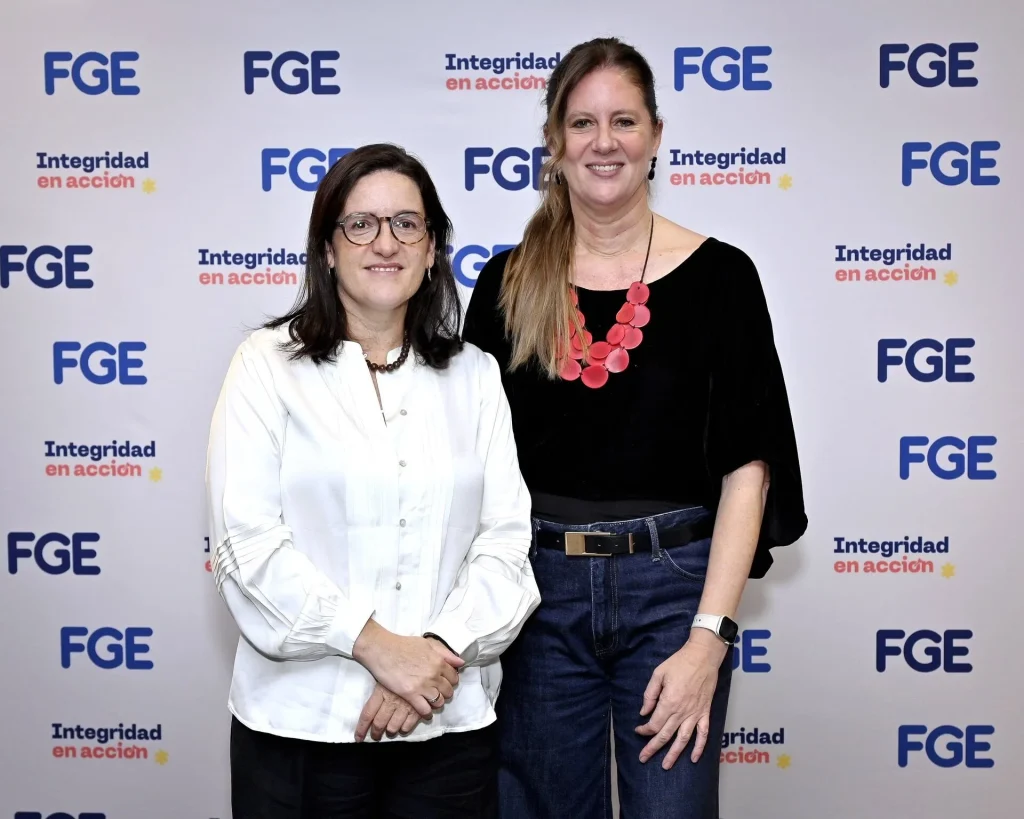
In this context, Fundación Generación Empresarial (FGE) invited our founding partner Carolina Altschwager to present and discuss how to approach these issues, where compliance is only the starting point, since compliance connected to purpose can not only drive conversations that strengthen a culture of integrity within an organization, but literally change a country.
At the start of the event, when attendees were asked about the main difficulties they face in addressing the gaps between regulatory compliance and their organizations’ ethical principles, the answers clearly reflected this challenge:
Compliance is often seen as a roadblock
It is hard to convey its value and translate it into KPIs
It is perceived as just another rule
Why change something that works?
What we saw, and what repeats across many organizations, is a clear gap. Compliance is still often perceived as a burden or a barrier to business, rather than as a value enabler.
So the challenge and the work ahead are enormous. And a central idea emerges: ethics, purpose, and compliance are not separate dimensions, but deeply interdependent. When aligned, they safeguard not only compliance but also the sustainability of the business.
From our experience, the evidence of the gap is clear: 96% of leaders believe the ability to address ethical issues will be critical to future success, but only 43% believe their organizations are prepared to do so.
The idea that informing is not enough was reinforced. A culture of integrity is not established through rules or isolated training sessions, but through processes that engage people and create meaning for them.
“To make progress on ethics, we need to have conversations about the things that matter to us”
This means opening real, and often uncomfortable, spaces for reflection and listening, where people can understand the purpose behind the rules and their role within that framework.
In this process, leadership is critical.
Our studies show that those in leadership roles tend to have higher levels of trust than the rest of the organization, revealing a disconnect between the experiences of each group.
Closing that gap means moving from instruction to building shared meaning, which requires coherence, time, and active leadership.
As María Elba Chahuán, director of FGE, emphasized, “today it is essential to be rigorous, ethical, and purpose-driven… because the world has changed. Customers don’t value those who are unethical. Today, we get punished.”
In this scenario, compliance can no longer be managed solely as a control system.
True cultural change means moving organizations from rules toward a culture of integrity.
“Embedding ethics in daily life not only strengthens trust, but becomes a competitive advantage for building more sustainable, human, and relevant companies” (Carolina Altschwager)
What we did
Connecting personal purpose with organizational purpose is the key to mobilizing real commitment and impact

What we did
Aaron Hurst explores the shift of purpose from inspirational rhetoric to a strategic imperative, and the key challenge of distinguishing between authentic conviction and mere corporate narrative.

What we did
It All Begins Here
Let's talk
Tell us where you are and let's talk about how to tackle it together.