



Connecting Organizational and Personal Purpose: A Two-Way Journey
What we did
Connecting personal purpose with organizational purpose is the key to mobilizing real commitment and impact
What are you looking for?
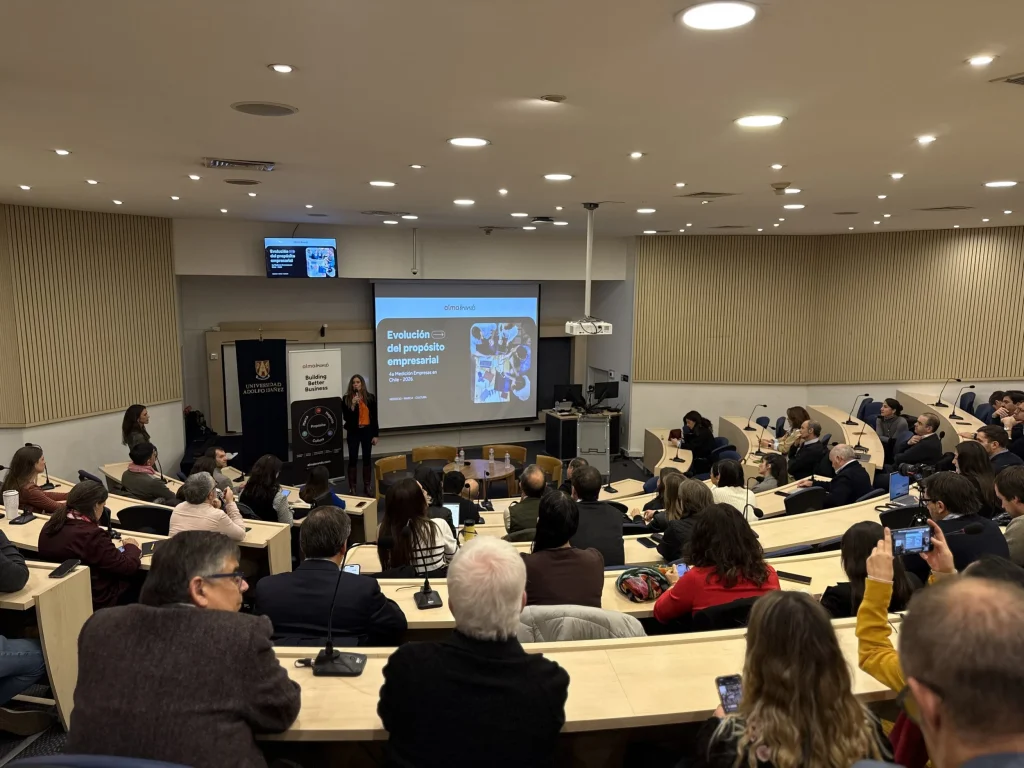
Corporate Purpose: From Narrative to Strategic Business Decision
By Carmen Montes, Senior Consultant, Almabrands
Corporate purpose remains relevant, yet it is losing its ability to impact the business.
The latest edition of the Evolution of Corporate Purpose study shows that while 87% of companies say they have a purpose, its strategic importance has dropped from 77% to 66%. The evidence shows that the impact of purpose has become confined to culture and brand, while its influence on the business remains weaker. The question, then, is no longer about the relevance of purpose, but about unlocking its potential not only in culture and brand, but also in the guidelines for strategic development.
Re-establishing Purpose as a Strategic Asset
When there is urgency for short-term financial results, organizations tend to prioritize decisions and initiatives that have a quick and direct impact on their financial performance. The logic and rollout of purpose, on the other hand, requires a longer-range view. When the short and long term become mutually exclusive and purpose is no longer connected to business ambition, the chance of it becoming an effective tool across all areas of the company begins to weaken.
Re-establishing purpose as a strategic asset requires a shift in approach: no longer seeing it as a declarative framework, but managing it as a tool that guides growth, differentiation, and innovation. It is at that point—when purpose influences which businesses to develop, which investments to prioritize, or which opportunities to explore—that it goes from being mere inspiration to becoming strategy.
Measuring to Make Purpose’s Power to Drive the Business Visible
The second factor that may be undermining purpose’s ability to connect with the business is the lack of associated KPIs. Without measurement tools, purpose cannot enter the strategic conversation on equal footing. In this edition, the study confirms that the lack of metrics remains one of the main barriers to the willingness to implement it. And this has a direct consequence: what isn’t measured isn’t managed. And what isn’t managed can’t compete.
The challenge, then, is not only to monitor its role in the cultural or reputational sphere, but also to evaluate, visibly and concretely, its impact on business results: growth, innovation, and efficiency, to name a few. Only then does purpose stop being an inspiring but intangible phrase and become manageable.
Governance: Purpose at the Table Where Strategic Decisions Are Made
The third challenge is governance. When purpose moves away from senior management or is confined to specific areas, it loses its ability to integrate with and drive key decisions. The Almabrands study shows that its management is shifting toward the People area, at the risk of being limited to the cultural sphere. The problem isn’t who manages it; the problem is where decisions are made. If purpose is not present in boards, strategy committees, and business-definition forums, it cannot fulfill its role.
Re-establishing its governance at those tables is not symbolic; it is structural.
The Challenge Lies in Both Strategic Vision and Execution
For years, the conversation focused on defining a good purpose; today, the challenge is different: making it materialize across every area of the company—culture, brand, and, decisively, business strategy. Because in an environment where everything competes for attention and resources, purpose will not be sustained by conviction alone.
The meaning, role, and transformative impact of purpose in companies will unfold and endure when it is valued and validated (hence the metrics) as part of the business strategy. And that, today, is the real challenge for companies that have defined their purpose and seek to grow and have a positive impact on their business as well as on people and society.
Download the full study here
What we did
Connecting personal purpose with organizational purpose is the key to mobilizing real commitment and impact

What we did
Aaron Hurst explores the shift of purpose from inspirational rhetoric to a strategic imperative, and the key challenge of distinguishing between authentic conviction and mere corporate narrative.

What we did
It All Begins Here
Let's talk
Tell us where you are and let's talk about how to tackle it together.